
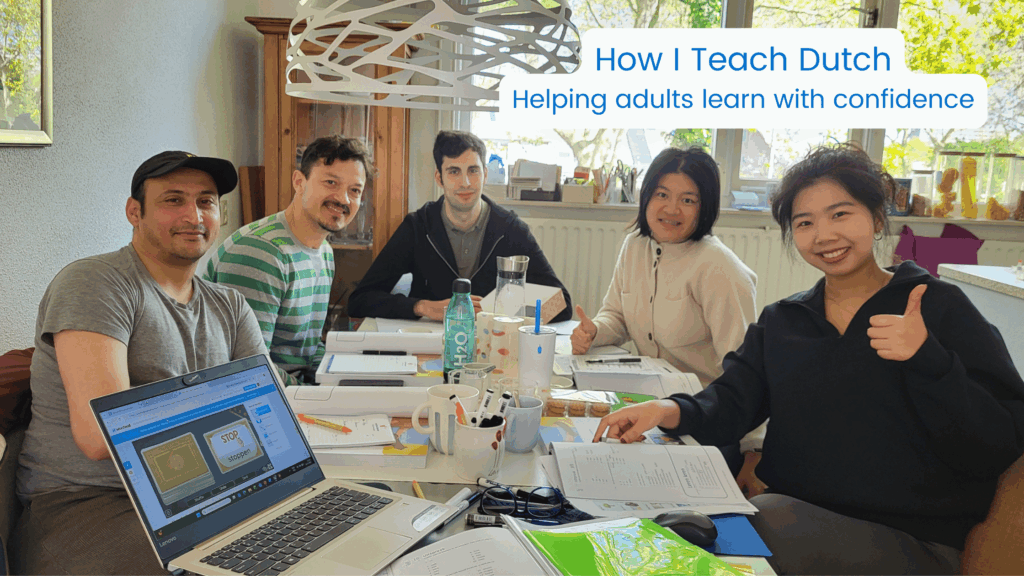
What Makes Active Dutch Different? My Teaching Principles
If you’re looking for a Dutch course, you’ll probably notice that many schools use the same course books and cover the same grammar topics. So what makes one Dutch course different from another? For me, it’s not just about what I teach, but how I teach. My goal isn’t simply to explain Dutch grammar. My goal is to help expats feel confident using Dutch in everyday life. Whether you’re ordering bread at the bakery, chatting with your neighbours, speaking to your child’s teacher or preparing for the inburgering exams, I want you to feel comfortable communicating in Dutch. Here’s what you can expect when you join an Active Dutch course.
We use class time for the things that really matter
Many grammar exercises and reading tasks can easily be done at home. That’s why we don’t spend valuable lesson time filling in exercises or checking answers together. Instead, my lessons are interactive. We use class time for the things you really need a teacher for: speaking, listening, asking questions, improving your pronunciation and receiving personal feedback. In group courses, you’ll also learn from your classmates by practising real conversations together. Speaking a new language can feel intimidating at first, but the more you practise, the more confident you’ll become.
Grammar doesn’t have to be difficult
Many students tell me they’re worried about Dutch grammar before they start. I understand why. Dutch word order and verb forms can seem complicated at first. That’s why I explain grammar using colours, diagrams, visuals and plenty of practical examples. Instead of memorising rules, you’ll learn how grammar works in real-life situations. After every lesson, you’ll receive a PowerPoint presentation with the grammar, vocabulary and examples we covered in class. It complements the course book and gives you a clear overview to review whenever you need it.
Why I use English in beginners’ courses
Some people believe beginners should only hear Dutch in class. I take a different approach. When you’re just starting, your brain is already working hard to recognise unfamiliar sounds, learn new vocabulary and build sentences. Explaining new grammar entirely in Dutch often leads to confusion and frustration. Using English as a supporting language allows me to explain difficult concepts clearly and helps students build confidence from the very beginning. As your Dutch improves, we naturally use more and more Dutch in class.
Learning by doing
I believe people learn a language best when they actively use it. That’s why my lessons include plenty of speaking activities, role plays and interactive exercises. I also create digital Wordwall quizzes and speaking cards to help students practise grammar and vocabulary in an engaging way. Learning Dutch takes time and repetition, but that doesn’t mean it has to be boring. By using visuals, games and interactive activities, I make practice enjoyable while helping students remember what they’ve learned. When learning is engaging, it’s much easier to stay motivated.
Pronunciation comes first
One of the very first things we do in a beginners’ course is learn the sounds of Dutch. Dutch vowels can be challenging for many learners, so we start by learning to hear the differences before trying to pronounce them ourselves. In class, we spend a lot of time listening, repeating and practising together because good pronunciation begins with careful listening. Building a strong foundation from the beginning makes speaking Dutch much easier later on.
Learning the language and the culture
Learning Dutch is about more than grammar. As a native Dutch speaker, I also introduce students to everyday expressions and cultural habits that you’ll encounter outside the classroom—things you won’t always find in a course book. For example, do you know what a cashier means when they ask “Gaat het zo mee?” Understanding these little cultural moments helps you feel more at home in the Netherlands and gives you confidence in everyday situations.
A safe place to learn
Learning a language means making mistakes—and that’s completely normal. I work hard to create a classroom where everyone feels welcome and respected, regardless of their background, beliefs, gender, age or previous language-learning experience. I also know what it’s like to be the newcomer. Before becoming a Dutch teacher, I lived in Turkey as an expat myself. I remember trying to understand a different language, navigating unfamiliar customs and sometimes feeling unsure of myself. Those experiences have shaped the way I teach. Many students arrive feeling nervous about speaking Dutch. That’s perfectly okay. I’m a patient teacher, and questions are always welcome. I want every student to feel comfortable making mistakes, asking for help and gradually building confidence. I also believe learning should be enjoyable. We work hard, but there’s always room for humour, interesting conversations and celebrating the small victories along the way.
Every lesson starts long before we meet
Students experience the lesson, but they don’t always see the preparation behind it. Before every class, I create a detailed lesson plan with clear learning objectives, activities, timing and carefully chosen resources. Good preparation means that lessons flow naturally and that we make the best possible use of our time together. After each lesson, students receive the PowerPoint presentation and, for online lessons, the chat notes. Every course also has its own WhatsApp group where I share homework, Wordwall quizzes, links to my YouTube videos and practical information. It’s an easy way for students to ask questions, stay informed and keep in touch between lessons. If someone needs a little extra practice with a particular topic, I’m always happy to provide additional materials.
“Is learning Dutch too hard for me?”
This is one of the questions I’m asked most often. My answer is always the same: no. You don’t need to be naturally gifted at languages to learn Dutch. What matters most is your motivation, and having a clear goal makes all the difference. Whether your goal is passing the inburgering exams, finding a better job, speaking to your neighbours or simply feeling more at home in the Netherlands, that goal will help you stay motivated when learning becomes challenging. I also celebrate the small milestones along the way: understanding a conversation in a shop, making your first phone call in Dutch or having a chat with your neighbour. Those everyday successes are often the moments when students realise just how much progress they’ve made. Helping students reach those moments is one of the reasons I love teaching Dutch.
Ready to start learning Dutch?
If you’re looking for Dutch lessons that combine structure, personal support and plenty of opportunities to speak, I’d love to welcome you to one of my courses. Whether you’re taking your very first steps in Dutch, preparing for the Inburgering exams or looking for more conversation practice, there’s a course to suit your level and goals. 👉 View my current Dutch courses I hope to welcome you to an Active Dutch class soon!
 You can learn more about my Dutch course options, or contact me for more information. I would also encourage you to sign up to receive my newsletter in which I share updates and exclusive Dutch learning content for expats! If you want to get to know me and my teaching style first, you are welcome to check out student testimonials or book a free intake session!
0 Comments